
Ibn Battuta’s Uzbekistan Tour
Tour Details
10 days
All year round
Season
from $1,140 / per person
Description
Ibn Battuta’s Uzbekistan Tour follows the route of a 14th-century explorer, focusing on UNESCO World Heritage Sites, historic Silk Road cities, and major centres of Islamic learning. The itinerary is designed for travellers with an interest in history, culture, and intellectual heritage.
Ibn Battuta (1304–1369) is regarded as one of the most significant travellers in world history. Over a period of nearly 28 years, he journeyed across large parts of Europe, Asia, and Africa, covering an estimated 120,000 kilometres. His role extended beyond travel alone. He was also
- a geographer, observing landscapes, cities, and routes
- an ambassador, undertaking diplomatic missions
- a trader, moving along Silk Road commercial networks
- a historian and chronicler, recording societies, rulers, scholars, and daily life
In 1333, Ibn Battuta reached Transoxiana, in what is now Uzbekistan. He described the region as one of the most developed areas of the Islamic world, notable for its cities, scholarship, trade networks, and spiritual life.
His travel account, written in Arabic under the title Tuhfat an-Nuzzar fi Gharaib al-Amsar wa Ajaib al-Asfar and commonly known in English as The Journey, is considered one of the most important geographical and historical sources of the 14th century. The work offers rare insight into the political structures, cultures, and intellectual traditions of the medieval Islamic world.
This tour explores the places Ibn Battuta encountered in Uzbekistan and the ideas he recorded, focusing not only on monuments, but also on living traditions and centres of learning that shaped the region.
Tour highlights
- Inspired by Ibn Battuta’s 14th-century journey and observations of urban civilisation
- Emphasis on UNESCO World Heritage Sites
- A Silk Road perspective combining historic cities, trade networks, and desert routes
Program
Arrival at Urgench International Airport in the morning. Meet and greet, followed by a transfer to Khiva (35 km), the historic heart of Khorezm, one of the regions that left a strong impression on Ibn Battuta. Khiva once controlled key trade routes along the Amu Darya, linking the nomadic lands of the Golden Horde with the settled cities of the region.
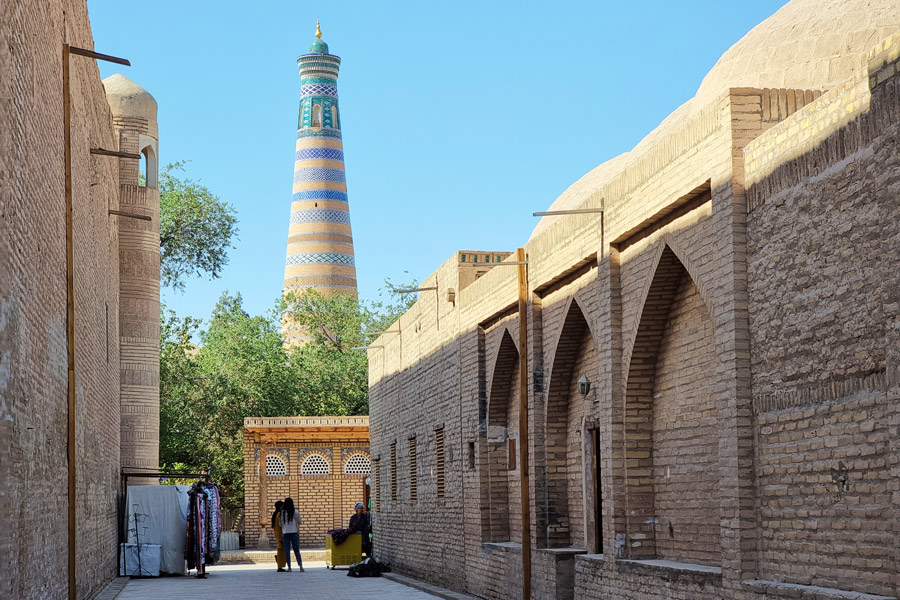
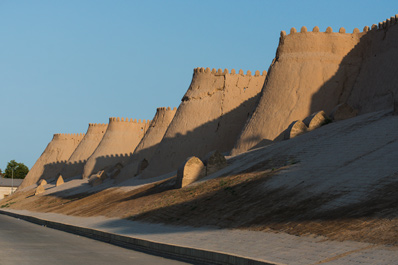
Upon arrival in Khiva, breakfast at the hotel. Leave your luggage at the hotel, with check-in available at noon. Begin a guided walking tour of Itchan-Kala, the UNESCO-listed inner fortress of Khiva. As you explore its cobbled alleyways and remarkably well-preserved monuments, the city’s layered history comes vividly to life.
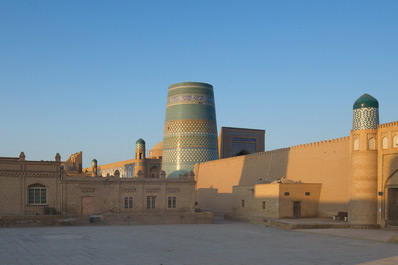
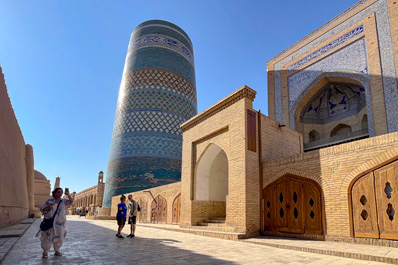
Highlights of the tour include Kunya-Ark, the former residence of the khans and the city’s ancient citadel; the Kalta Minor Minaret, instantly recognisable by its striking turquoise tiles; the Muhammad Amin-Khan Madrasah and Muhammad Rahimkhan Madrasah, outstanding examples of medieval Islamic architecture; and the Juma Mosque, renowned for its 212 carved wooden columns. Continue to Tash-Hauli Palace, with its ornate courtyards and fortified walls, and visit the Pahlavan Mahmud Mausoleum, Khiva’s most important spiritual complex. The tour also includes the Islam Khodja Minaret and Madrasah, a defining feature of Khiva’s skyline.
Enjoy time to stroll through the maze-like streets of the old town and visit local craft workshops. Overnight in Khiva.
After breakfast, set out for a full-day exploration of the Ancient Khorezm fortresses (approximately 2 hours one way). Ibn Battuta noted the importance of Khorezm as a vital link between settled cities and the steppe routes of the Golden Horde. Your guide will pick you up from your hotel in Khiva to begin the journey.
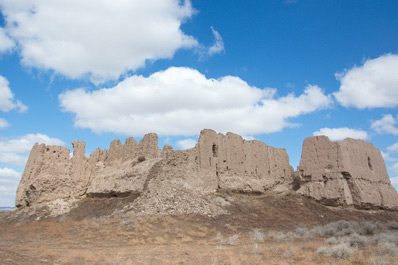
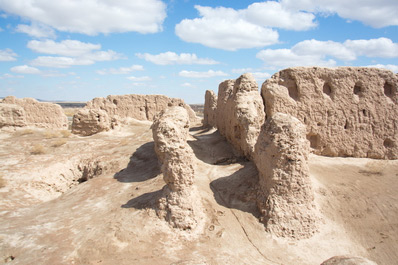
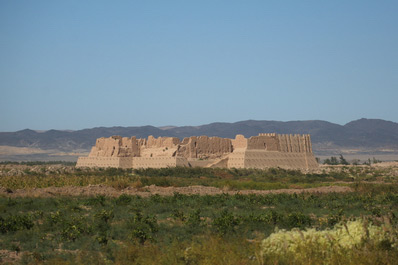
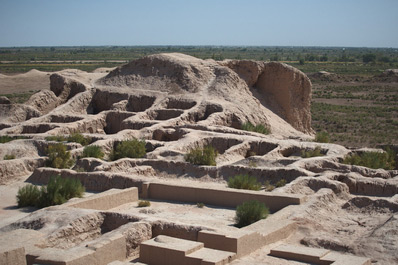
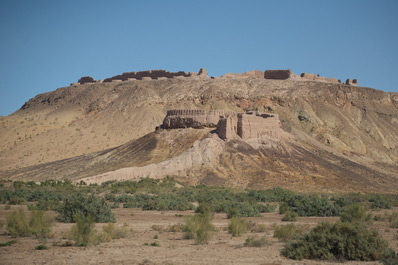
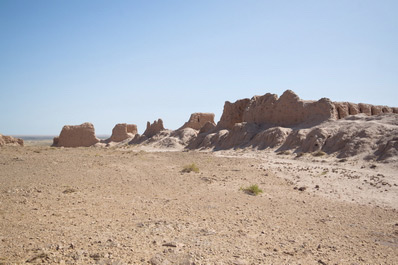
You will visit several archaeological monuments known collectively as the Desert Castles of Ancient Khorezm, located in the Ellik Kala (Fifty Fortresses) region:
- Kyzyl-Kala (Red Fortress), a striking remnant of antiquity dating back to the period of the Kushan dynasty;
- Toprak-Kala (Earthen Fortress), one of the most distinctive monuments in Khorezm, notable for its scale and architectural layout. You will explore the remains of this ancient settlement, which served as the capital of Khorezm in the 3rd century AD;
- Ayaz-Kala, one of the largest fortress complexes in Khorezm, dating to the height of the Kushan Empire in the 2nd century AD. Here, you will also visit a nearby yurt camp, offering insight into the nomadic world that interacted with Silk Road cities during Ibn Battuta’s era.
After the visit, drive back to Khiva. Free time. Overnight in Khiva.
In the morning, transfer to Bukhara (480 km, approximately 7 hours), travelling through the Kyzylkum Desert along ancient Silk Road caravan routes. For centuries, caravans transporting porcelain and spices followed this same path across the desert. Ibn Battuta often described such desert crossings as true tests of endurance and faith.
Arrive in Bukhara in the late afternoon. Check in at the hotel and enjoy a free evening in the Old City, the picturesque historic heart of Bukhara. Overnight in Bukhara.
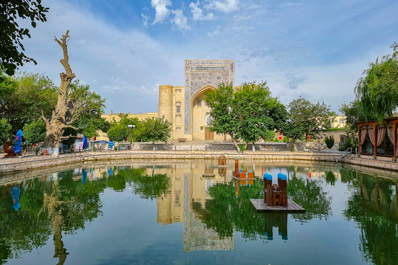
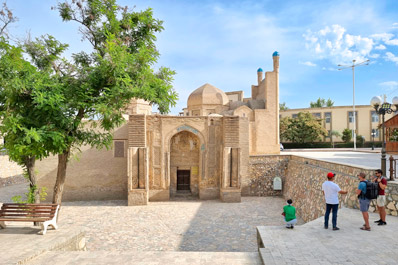
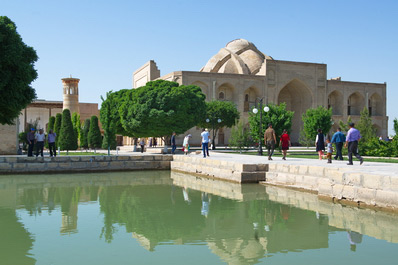
Bukhara is one of the great Islamic centres of knowledge, and its historic centre is a UNESCO World Heritage Site. Begin the morning with a walking tour led by your local guide. Your private tour includes the Lyabi-Hauz Ensemble, the Magoki-Attori Mosque, and the historic Trading domes of the Silk Road, which today function as a traditional tourist bazaar.
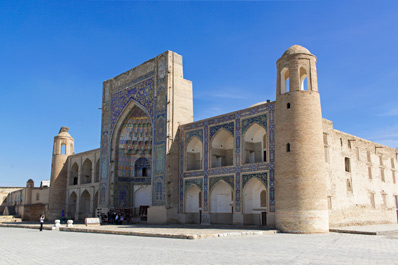
Continue to the Poi Kalyan Ensemble, visiting the Kalyan Minaret, Kalyan Mosque, and Miri-Arab Madrasah. The tour also includes the Ulugbek Madrasah and the Abdulazizkhan Madrasahs. Spend time wandering through artisan workshops and the narrow, winding streets and alleyways of the old city.
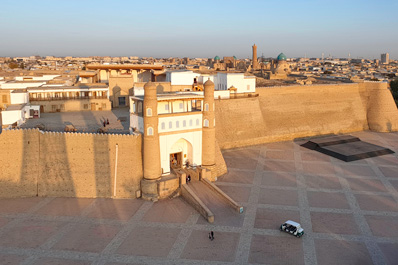
Discover the Ark Fortress and its museum, once the political heart of Bukhara. Continue to the Bolo-Khauz Mosque with its reflective pond, and conclude the tour at the Mausoleum of Ismail Samani. Overnight in Bukhara.
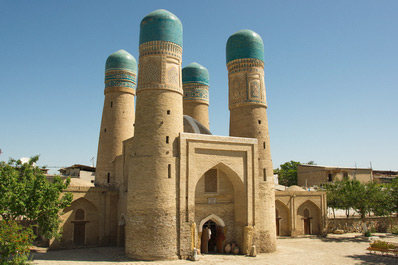
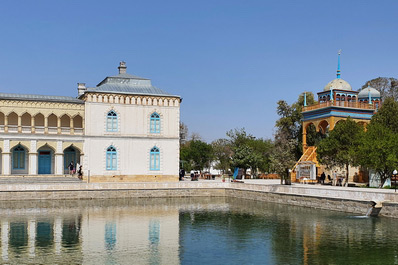
After breakfast at the hotel, begin the morning with a city tour. Your private tour includes Chor Minor (Four Minarets), an unusual madrasah built by Niyazkul in the 18th century. Continue to the Emir’s Summer Residence, Sitorai Mokhi-Khosa (19th century), a distinctive complex reflecting a blend of Oriental and Russian architectural styles.
Bukhara is a major centre of Sufism, representing the spiritual life encountered by Ibn Battuta. Visit the Bakhautdin Naqshbandi Mausoleum, an ensemble dedicated to the founder of the Naqshbandi Sufi order. The complex includes a mausoleum, mosque, pond, and museum. The final site of the tour is the Fayzulla Khodjaev House Museum, a restored residence illustrating the architecture and interior décor of a 19th-century Bukharan home.
After the tour, transfer to the railway station to board the train to Samarkand (280 km). Travel to the legendary city of Samarkand, one of the world’s great crossroads, historically linking China, India, Persia, and Europe as a vital cultural bridge. Upon arrival, transfer to the hotel. Overnight in Samarkand.
Enjoy a full-day city tour of Samarkand, one of the world’s legendary cities and a vivid reflection of the cosmopolitan spirit of the Silk Road, where trade, science, architecture, and faith were deeply interconnected.
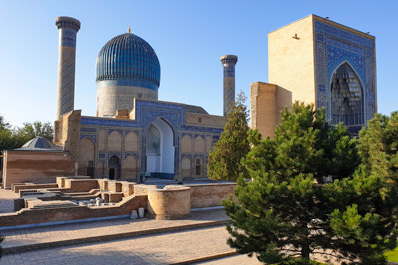
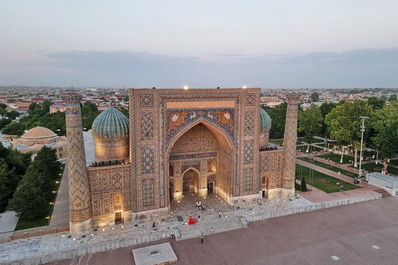
Begin the tour with a visit to Gur-Emir, the imposing mausoleum of Tamerlane and the 15th-century astronomer Ulugh Bek. Continue to the magnificent Registan Square, framed by three madrasahs dating from the 15th to the 17th centuries and long regarded as the heart of Samarkand.
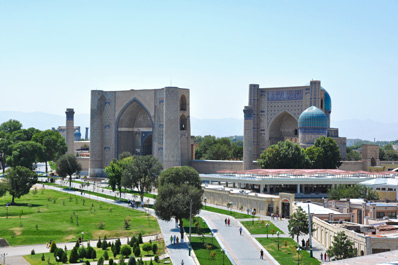
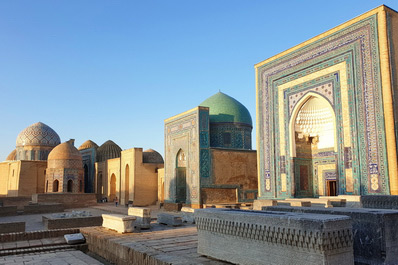
Next, admire the grandeur of the Bibi Khanum Mosque, then stroll through the multi-level complex of Siab Bazaar, where you can browse for souvenirs and sample local sweets, fresh fruits, and Samarkand’s famous bread. The tour continues to Shakhi-Zinda, an impressive burial complex dating mainly from the 15th century. Walk along its ceremonial pathway to admire the richly decorated blue-domed mausoleums.
After the tour, transfer to the hotel. Overnight in Samarkand.
Enjoy a day excursion to Shakhrisabz, the birthplace of Amir Timur. Shakhrisabz reflects the political and cultural ambitions of Central Asia in the late 14th century, building on traditions already familiar during the lifetime of Ibn Battuta.
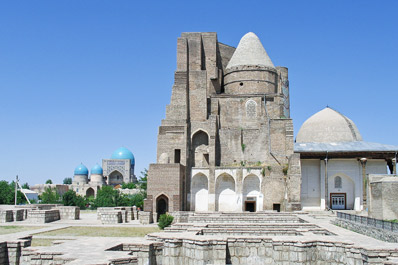
Your guide will meet you in the hotel lobby before departing for Shakhrisabz (90 km, approximately 2 hours), travelling via the Tahtakaracha Pass. Upon arrival, begin a city tour of Shakhrisabz, including visits to the Dor-us Siyodat Memorial Complex, which incorporates the Jahongir and Omar Sheikh Mausoleums as well as the 14th-century Hazrat Imam Mosque.
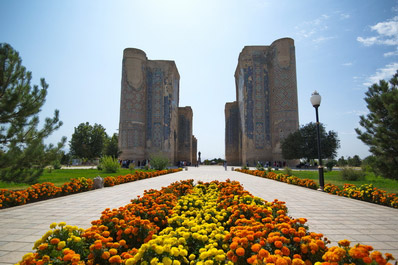
Continue to the Dor-ut Tilovat Ensemble, featuring the Kok-Gumbaz Mosque (Blue-Domed Mosque) and the burial vault of Tamerlane’s father. The tour also includes the ruins of the Ak-Saray Palace (White Palace), once Tamerlane’s summer residence and regarded by his contemporaries of the 14th and 15th centuries as a remarkable architectural achievement.
After completing the city tour, return to Samarkand in the afternoon. Overnight in Samarkand.
After breakfast, check out from the hotel and continue your guided sightseeing tour of Samarkand, one of the most celebrated cities of the Silk Road. Begin with a visit to the Ulugbek Observatory, where you will see the remains of the remarkable 14th–15th-century sextant and explore the museum dedicated to medieval astronomy.
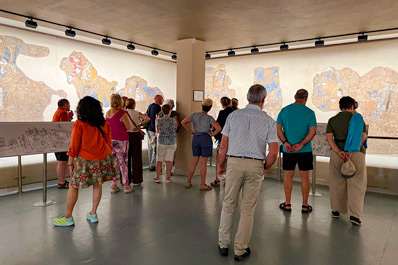
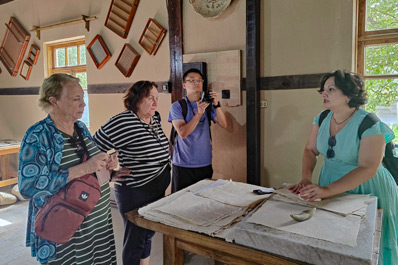
Continue to the Afrosiab excavation site and museum, which reveal the ancient origins of Samarkand. Next, visit the Mausoleum of Khodja Daniyar, traditionally believed to be the burial place of the Prophet Daniel and an important pilgrimage site. Drive to Konigil Village to observe the traditional process of producing Samarkand paper from mulberry bark, preserved using ancient techniques. The tour continues with a visit to the Oriental Silk Carpet Factory, where you can see how high-quality handmade carpets are created using traditional methods.
In the afternoon, transfer to the railway station for your train journey to Tashkent (310 km). Upon arrival, meet your driver and transfer to your hotel. Overnight in Tashkent.
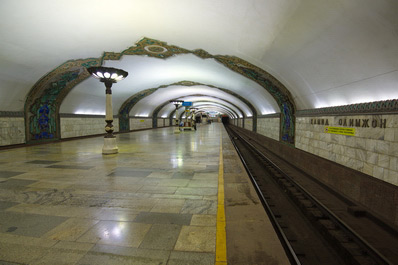
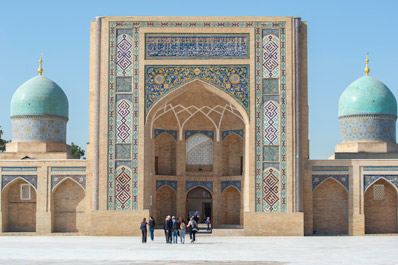
After breakfast, enjoy a guided city tour of Tashkent, the capital of Uzbekistan. Begin with a visit to the Museum of Applied Arts, which displays exquisite examples of national handicrafts inside a beautifully decorated historic villa. Continue with a ride on the Tashkent Metro, renowned for its artistically designed stations, each featuring distinctive murals and decorative tilework.
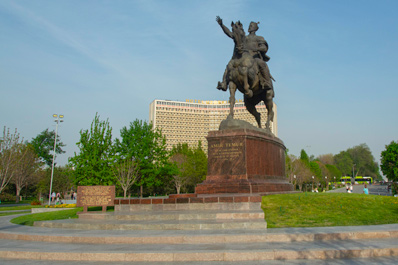
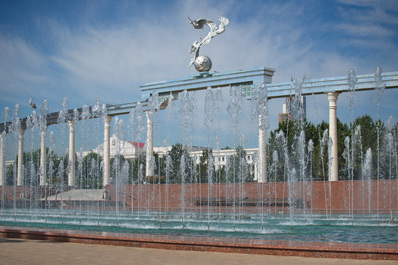
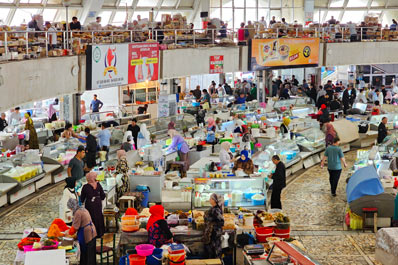
The tour then continues with a walk through Amir Timur Square and Independence Square, two key landmarks of modern Uzbekistan. Explore the Old City, including the Hast-Imam Complex (15th century), an important centre of cultural heritage. Conclude the tour at Chorsu Bazaar, one of the oldest markets in Central Asia, where you can shop for fresh produce, traditional sweets, and local souvenirs.
Departure at any time. Transfer to the airport is included. End of Ibn Battuta’s Uzbekistan Tour.
- Accommodation in double or twin rooms with breakfast included, for 9 nights;
- Transfers including airport and railway station pick-ups and drop-offs;
- Transfers on the routes Khiva – Bukhara and Samarkand – Shakhrisabz – Samarkand;
- Economy-class train tickets for the Bukhara–Samarkand and Samarkand–Tashkent routes;
- One additional breakfast in Khiva;
- Khiva walking city tour (local guide, entrance fees included);
- Khorezm Fortress tour (local guide, entrance fees, and transport included);
- Bukhara walking city tour (local guide, entrance fees included);
- Bukhara city tour (local guide, entrance fees, and transport included);
- Samarkand city tour over two days (local guide, entrance fees, and transport included);
- Tashkent city tour (local guide, entrance fees, and transport included).
- Personal expenses and tips;
- Meals not indicated in the programme;
- Hotel charges for additional services;
- Personal travel insurance;
- International flight tickets before and after the tour;
- Any other charges and services not listed under “Inclusions”.
Accommodation:
| Khiva 2 nights |
| Annex, Malika Kheivak, Grand Vizir |
| Bukhara 2 nights |
| Marhaba, Makon Art, Mehrob, Emerald |
| Samarkand 3 nights |
| Shohjahon Palace, Wellfort, Altair |
| Tashkent 2 nights |
| Inspira-S, ATECA, Baden-Baden |
Prices
| Persons | Economy |
|---|---|
| 2 persons | $1,630 |
| 4 persons | $1,360 |
| 6 persons | $1,250 |
| 8 persons | $1,140 |
per person
Single supplement: Economy $290
Booking Inquiry
Fill out the form and we will contact you shortly.
Reviews
No reviews yet.