

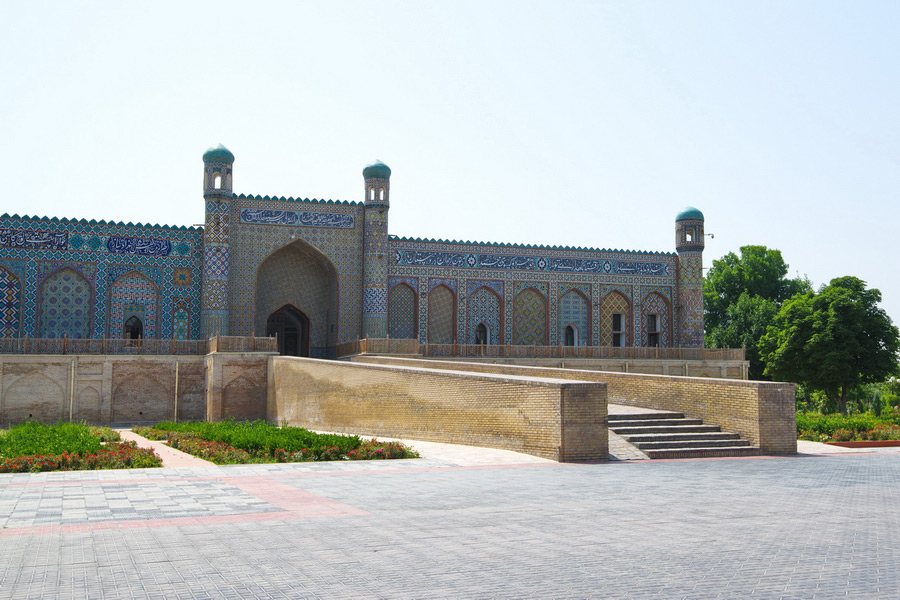
The Khudoyar Khan Palace is one of the most striking landmarks in the city of Kokand. The palace complex is built in the best traditions of Uzbek architecture and is a striking example of the highest craftsmanship of the architects of the Fergana Valley. The rich decoration of the Khudoyar Khan's residence emphasizes the power and status of the ruler. The Khudoyar Khan Palace is also worth visiting because it houses the Kokand Local History Museum, which has a rich collection of valuable artifacts that tell about the nature, culture, and history of the region.
History
The palace was built in 1871 at the behest of one of the most powerful and influential rulers of the Kokand Khanate, Khudoyar Khan. At the time of its construction, it occupied a huge area and had 7 courtyards and 119 rooms. However, a few years after its completion, Khudoyar Khan was overthrown, and Kokand came under the influence of the Russian Empire as a result of fierce battles. During the fighting, the palace was significantly damaged, and at present, we can see only a small part of it: just two courtyards and 19 rooms. Nevertheless, the preserved segment of the complex impresses with its rich decoration and architecture, which speaks to the scale of the ensemble built 150 years ago.
Architecture
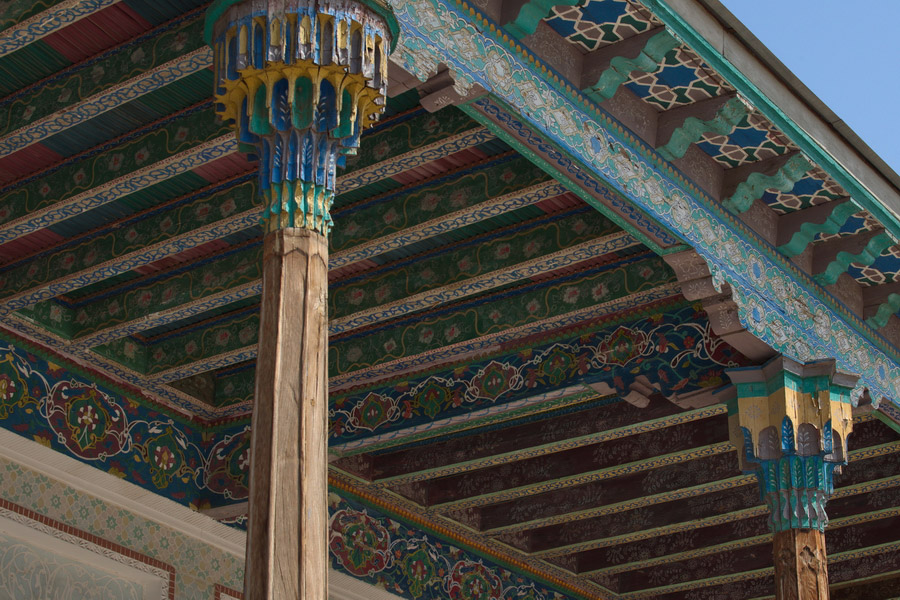
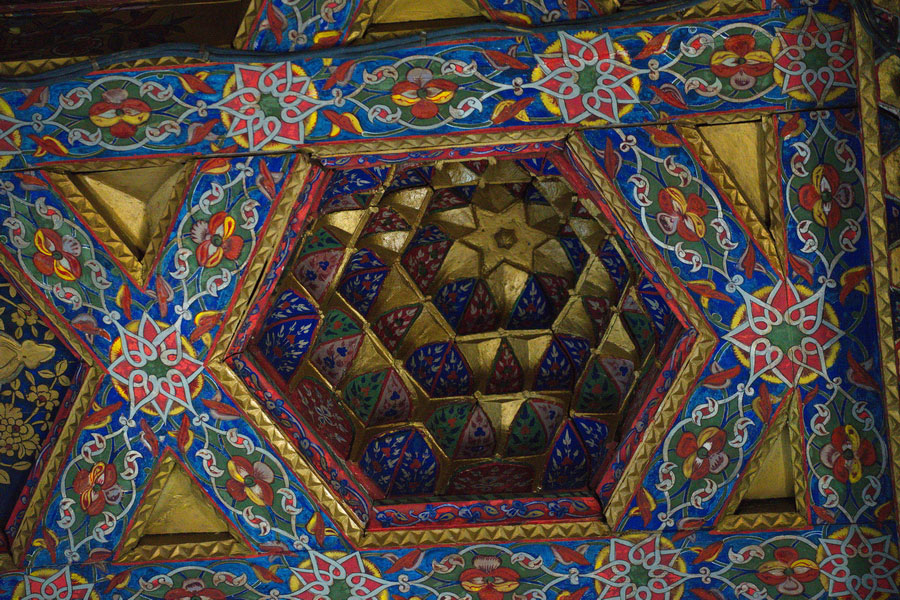
The architecture of the Khudoyar Khan Palace is an example of the intertwining of Uzbek, Turkic, and Persian styles. This diversity has made the palace a unique cultural monument that reflects the rich heritage of the entire Fergana Valley.
The facade of the palace is decorated with tiles covered with glaze and bright colors. Colorful patterns and bright ornaments intertwine harmoniously, forming a colorful canvas that can be viewed endlessly. The entrance portal (peshtok) is decorated with a pointed arch, and on both sides of it are stately minarets with domed lanterns-rotundas.
The interior of the palace is decorated with carved wooden columns, stained glass windows, and exquisite paintings on the walls and ceiling. The complex is surrounded by greenery, once part of a huge lush garden where Khudoyar Khan loved to stroll.
Legends
Khodoyar Khan's palace is shrouded in many mysteries and legends. According to one of them, there is a network of tunnels under the palace through which the ruler could escape from the palace in case of an enemy attack. It is said that one of these tunnels is so long that it extends far beyond the city limits. Another legend tells of untold treasures stored somewhere in the depths of the palace. Rumor has it that Khudoyar Khan, anticipating his overthrow, hid gold coins and precious stones inside the walls to use them in the future. Researchers have not yet found confirmation of this myth, but thanks to such curious theories, visitors to the palace can give free rein to their imagination and make their own assumptions about the ancient treasures of the richest khan of Kokand.
Museum
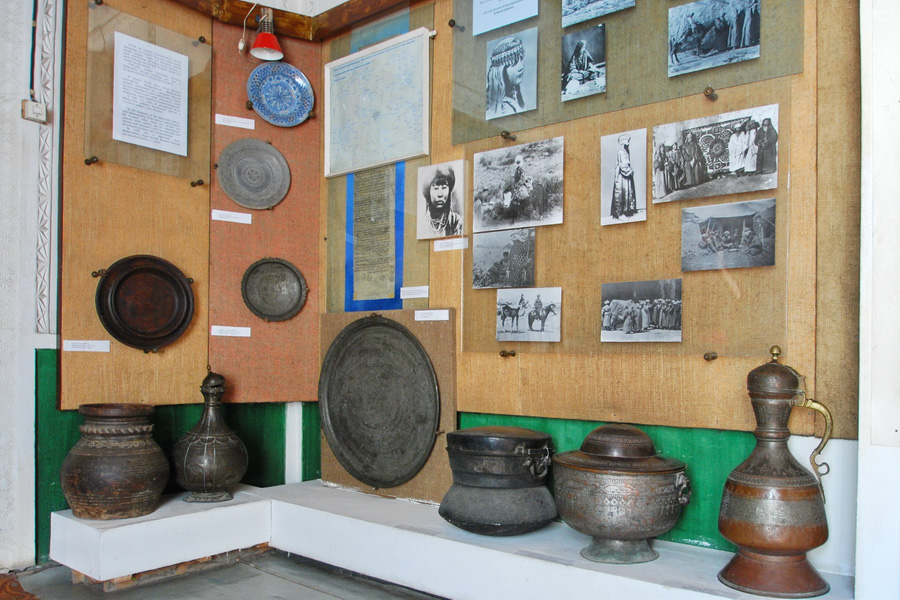
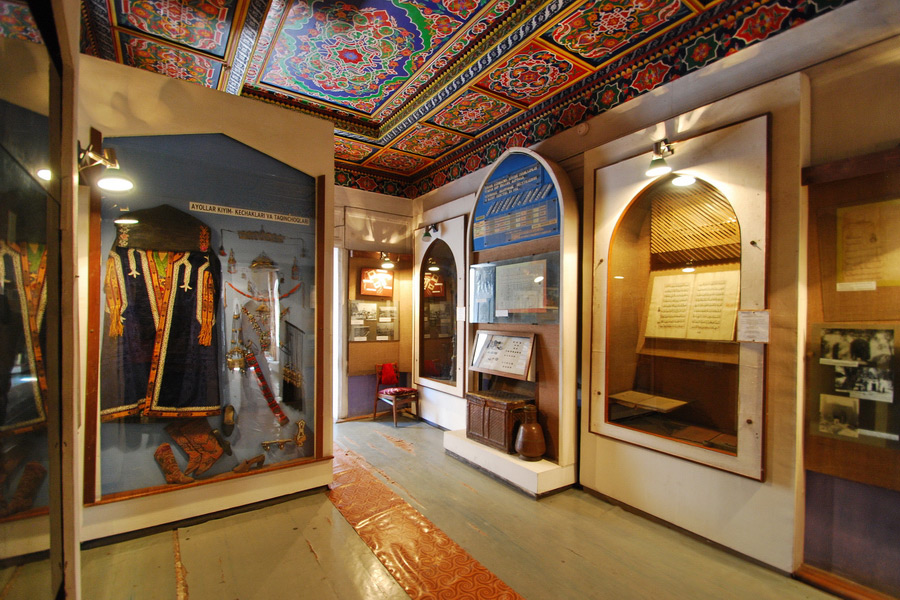
The Kokand Local History Museum, located within the palace walls, has amassed an extensive collection of valuable artifacts over its many years of operation, illustrating the characteristics of everyday life, culture, history, art, and crafts. The exhibition includes unique pieces of furniture made by skilled craftsmen for the khan's court, as well as tableware, rare weapons, ancient manuscripts, and folios. Of particular interest is the collection of military equipment, much of which was presented to Khudoyar Khan as gifts by high-ranking ambassadors of foreign powers. Among the most valuable exhibits are swords, shields, and the legendary helmet of a conquistador, brought to Kokand on a diplomatic mission from Spain. The museum is actively engaged in research work: exhibitions, conferences, and festivals are regularly held within its walls. These events not only contribute to the popularization of the heritage of Kokand and the Fergana region, but also allow it to be preserved for future generations.