

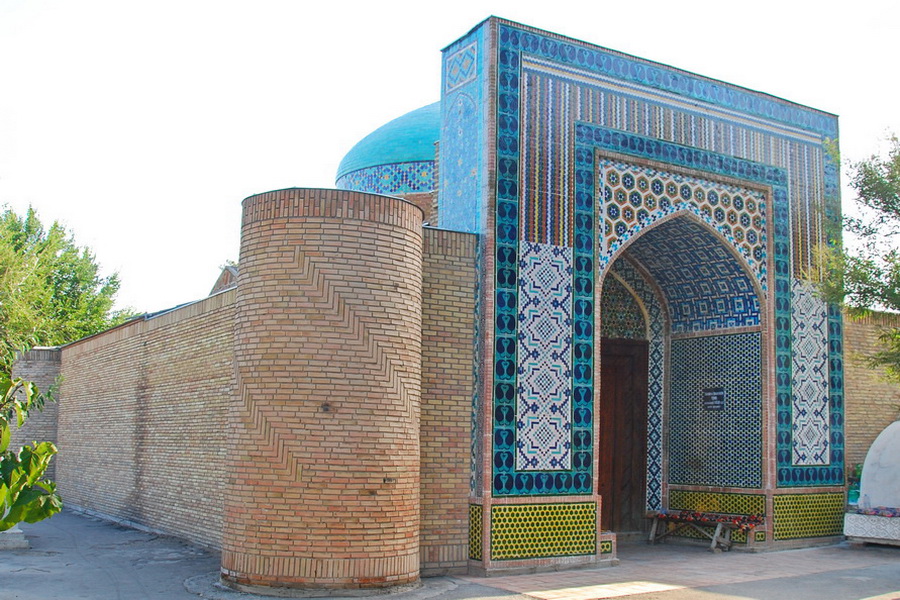
Damoi Shakhon is the family mausoleum of the rulers of the Kokand Kingdom, serving as the resting place of powerful khans, their relatives, and members of the nobility. The mausoleum is a compact architectural ensemble that includes the main tomb with a richly decorated entrance portal and dome, a mosque, and an open-air necropolis. The name of the complex translates as “tomb of kings”. Deeply revered by local residents, Damoi Shakhon also draws travellers interested in the history and cultural heritage of Kokand.
Burials
Within the fenced grounds of the tomb lie several burials, each preserving the memory of remarkable figures from the past. At the centre stands the tomb of Kokand ruler Umar Khan. A massive sarcophagus rises above his grave, its size reflecting his great importance in the region’s history. Nearby rests his father, Narbuta-biy, who played a crucial role in strengthening the power of the Kokand Khanate. Later generations of the ruling dynasty also found their final resting place here - the sons and grandsons of Umar Khan, who continued his legacy in governing the khanate.
The Damoi Shakhon complex is a true masterpiece of craftsmanship. The entrance portal is adorned with colourful turquoise majolica, its elegant patterns showcasing the refined skill of Kokand’s architects. The wall and dome paintings inside the mausoleum are particularly striking. Their intricate patterns and floral motifs symbolise a deep connection with God and nature, while the white tones of the interior convey purity of thought and nobility of spirit. The main entrance features tall wooden doors decorated with intricate carvings. These refined details not only enhance the monument’s beauty but also hold profound spiritual meaning, reminding visitors of timeless truths and lofty ideals.
History
The idea of building the Damoi Shakhon mausoleum belonged to the renowned Uzbek poetess Nodira Mohlaroim. Gifted with a brilliant mind and rare poetic talent, Nodira left a lasting mark on history as a wise and visionary leader who ruled over a vast khanate.
After the death of Umar Khan in 1822, Nodira took on the mission of preserving the memory of her husband and his ancestors. She transformed the modest family tomb where her husband had been laid to rest into a grand memorial complex. Over time, this architectural ensemble became one of Kokand’s main landmarks, symbolising the splendour and cultural richness of the era.