

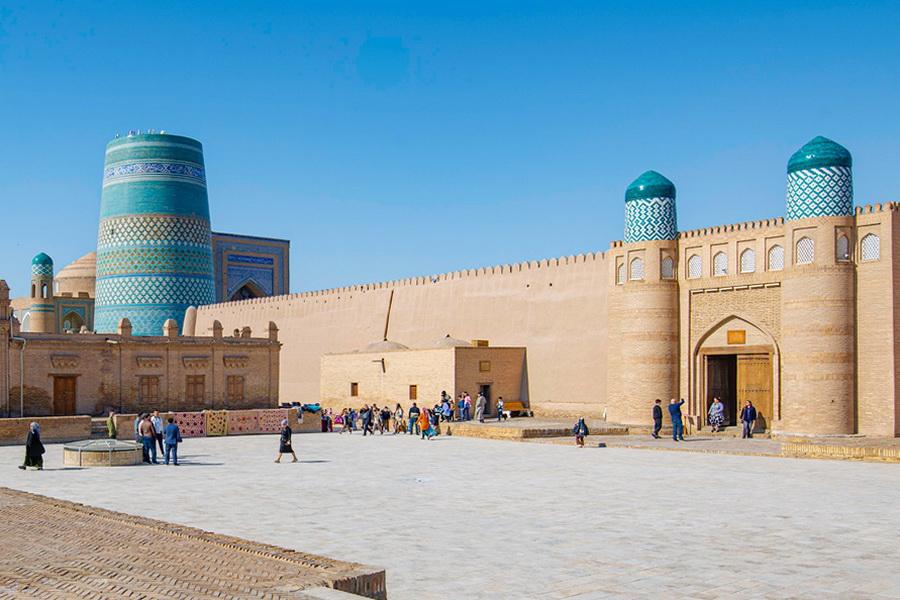
Kunya-Ark Fortress is the former citadel of the Khiva khans, located in the western part of Ichan-Kala, the historic heart of ancient Khiva. Surrounded by high, imposing walls, this fortified complex became a powerful symbol of the authority of the Khorezm rulers, who reigned here for over 400 years. Its architecture presents a harmonious blend of military fortifications and palatial elegance, with unique structures that have survived to the present day.
History
The fortress was first constructed between 1686 and 1688 by Hudaydah Khan, son of Anush Khan and the last ruler of the Sheibanid dynasty in the Khiva Khanate. A century later, it suffered significant damage during an invasion by Iranian forces. In the 19th century, Kunya-Ark was rebuilt and restored under Muhammad Rahim Khan II. Although a new palace - Tash-Khovli - was constructed in the heart of Ichan-Kala in 1838, Kunya-Ark continued to serve important functions until the fall of the Khiva Khanate in 1920. The name “Kunya-Ark”, meaning “Old Citadel”, came into use after the construction of the new palace, distinguishing the original fortress from its successor.
Architecture
Kunya-Ark is a multi-functional architectural ensemble composed of a variety of buildings, each serving a specific purpose. The main entrance features a gate flanked by two watchtowers, leading into a spacious courtyard surrounded by key structures. These include an iwan, a mint, a harem, and both winter and summer mosques. In earlier times, the complex also housed reception rooms for ambassadors, a treasury, library, archive, and prison. Today, a small installation with life-size figures recreates scenes from the prison’s harsh past. Interiors are adorned with vibrant murals featuring traditional Uzbek motifs, while the intricately carved wooden columns of the iwan and patterned glazed tiles showcase the masterful craftsmanship of Khiva’s artisans.
The Role of the Fortress
Beyond its function as a defensive stronghold, Kunya-Ark served as the political and administrative hub of the Khiva Khanate. It was here that critical state decisions were made, foreign envoys received, and trade negotiations conducted. A key component of the citadel was the mint, which produced silver and copper coins used throughout the khanate.
Modern times
Today, Kunya-Ark Fortress is one of Khiva’s most iconic tourist sites. Together with the monuments of Ichan-Kala, it is listed as a UNESCO World Cultural Heritage site. Visitors can explore the expansive courtyard, admire the architectural details, and climb the fortress walls for panoramic views over the old city.
Kunya-Ark is a remarkable example of Central Asian urban architecture from the XVII to XIX centuries. This atmospheric site continues to attract travellers from around the world - its observation deck offering a striking backdrop for photographs and a unique perspective on Khiva’s timeless skyline.